The Children and Young People (Safety and Support) Act 2025 (CYPSS Act) places a focus on whole‑of‑government and community responses to children and young people, and their families, with a public health approach enshrined.
On this page
Supporting the sector
The CYPSS Act strengthens how we work together by focusing on three key areas:
- Collaboration: Strengthens expectations for collaboration across the child protection and family support system.
- Shared responsibility: Supports shared responsibility for prevention, early intervention and response.
- Partnership: Formally recognising the sector and peak bodies as essential partners in delivering outcomes for children and young people.
New guiding principles
The CYPSS Act introduces a set of guiding principles that apply to decision‑making across South Australia’s child protection and family support system.
Who they apply to
Per Section 8, once commenced, these principles are a mandatory requirement for every person or body involved in the administration, operation, or enforcement of this Act. These principles apply system-wide across the entire child protection and family support system.
The four core principles
Click to expand each section for details:
The safety principle requires that decisions and actions under the CYPSS Act prioritise the safety and protection of children and young people from harm. When making decisions, consideration must be given to current and future risks to a child or young person's safety, wellbeing and development.
The Act recognises that children and young people have the right to be safe and protected and that safety is an integral to well-being. Decision-makers must carefully assess information about risks, vulnerabilities and protective factors to ensure that children and young people are safeguarded from abuse, neglect and other forms of harm.
In some circumstances, decision-makers may need to balance competing considerations. However, where a decision involves the removal of a child or young person under section 87 of the Act, the safety principle must take priority.
The best interests principle ensures that every decision made under the CYPSS Act is focused on achieving the best possible outcome for each child or young person. It places children and young people at the centre of decision-making and requires their unique needs, circumstances, identity, culture and relationships to be carefully considered.
In practice, determining what is in a child or young person’s best interests involves balancing a range of important factors. At its core, this includes keeping children and young people safe, protecting their rights, supporting them to express their views and to participate and supporting their development in a way that reflects their age and stage of life. It also means listening to and giving appropriate weight to their views and experiences.
The principle recognises the importance of family, culture and connection. Decisions should support children and young people to remain safely connected to their families, communities and culture wherever possible, and to maintain meaningful relationships with people who are important to them.
At the same time, the best interests principle emphasises the need for stability and timely decision-making. Children and young people should be supported to experience consistent care, build strong attachments, and have the opportunity to reach their full potential.
Active efforts means taking timely, purposeful and practical action to address the risks and needs affecting a child or young person.
Active efforts must be targeted to the circumstances of the child or young person and focus on the reasons they are at risk. They should be carried out, wherever possible, in partnership with the child or young person and their family, kin and community, and in a way that is culturally safe and appropriate.
This means taking genuine, collaborative and responsive action to address risk and support children and young people in a way that is practical, respectful and effective.
Ensuring interventions are timely, appropriate, and achieve positive outcomes. They reflect taking the right action at the right time, emphasising clear, practical responses that address identified needs and risks.
Overall, this principle reinforces the importance of acting promptly and appropriately to ensure that children and young people receive the support they need, when they need it.
Understanding the principles
The CYPSS Act does not prescribe a set formula for application; the principles must be considered as a whole. These are not optional; they are mandatory requirements within the new CYPSS Act and carry significant legislative weight.
Additional principles for Aboriginal and Torres Strait Islander children, and young people
The CYPSS Act recognises that the best interests of Aboriginal and Torres Strait Islander children, young people, and their families are realised when the Aboriginal and Torres Strait Islander Child Placement Principle is implemented to the standard of active efforts, for each of the five elements.
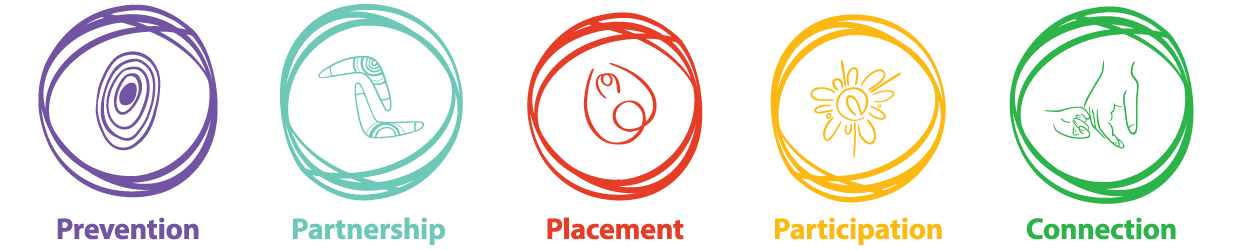
A number of additional considerations relating to reunification apply for Aboriginal and Torres Strait Islander families. These includes making active efforts to explore ways to reunify children with their parents, or place children within their own family or community.
Section 51 legislates the principle of family-led decision making, ensuring decisions are made in culturally safe and respectful ways.
This enables culturally based, family-driven decisions making which promotes self-determination and ensures families are supported to make informed choices in the best interests of their children.
Expanding best interest considerations for Aboriginal and Torres Strait Islander children and young people:
- requires compliance with the Aboriginal and Torres Strait Islander Child Placement Principle
- acknowledges different child rearing practices
- emphasises the need for strong cultural identity and connection
- reinforces the need for safety and support to build and express cultural, spiritual and other belief systems
- ensures children and young people have an environment in which they are supported by a carer who respects their cultural identity and nurtures their sense of self and identity in respect to their family, community, culture and Country.
State Strategy and the public health approach
| The State Strategy (Part 5) | Safety and Support Plans |
|---|---|
A central feature of the CYPSS Act which drives the public health approach. Directs shared effort to:
supporting children and young people in care, leaving care or who have left care. | Targeted planning at a system and service level prepared by key agencies. |
The strategy must:
| These plans will:
|
Aboriginal and Torres Strait Islander Focus:
Each part of the State Strategy must specifically address Aboriginal and Torres Strait Islander children and young people, strengthening accountability for achieving the best possible outcomes.
Partnerships and accountability
- Peak bodies as representatives of their sector interests and needs
- The importance of shared responsibility between government and non‑government partners
- The need to reduce duplication and improve coordination across services.
- Clearer roles and responsibilities across the system
- Enhanced annual reporting requirements
- Public reporting against the State Strategy
- Additional information required from DCP before Court decisions are finalised
- More transparency around feedback and complaints processes.
Changes to mandatory notifications
Legal Notice: The Children and Young People (Safety and Support) Act 2025 (CYPSS Act) has not yet commenced. Until the CYPSS Act comes into operation, all mandated reporters must continue to meet their obligations under the Children and Young People (Safety) Act 2017 (CYPS Act) and follow existing reporting processes.
What to do right now
Your mandatory reporting obligations have not changed.
If you are concerned about a child or young person and have a reasonable suspicion that they are, or may be, at risk of harm, you must report this concern.
- Call the Child Abuse Report Line (CARL): 13 14 78
- CARL operates 24 hours a day, 7 days a week
- In an emergency, call 000 immediately.
Continue to follow your organisation’s existing policies and procedures.
The CYPSS Act introduces changes to South Australia’s mandatory reporting requirements. These changes will not apply until the CYPSS Act commences. Before commencement:
- further work will be undertaken with partners and the sector
- clear guidance, training and resources will be developed
- mandated reporters will be supported to understand any changes.
Changes from current legislation to the CYPSS Act includes provisions that relate to:
- increasing the mandatory reporting threshold from ‘harm’ to ‘significant harm’
- recognising children and young people’s exposure to domestic and family violence
- reducing duplicate reporting where concerns have already been reported.
Further information about these changes, including what they mean in practice for mandated reporters, will be provided closer to commencement.